











Hero Background

AI Governance Services

Build Controls, Oversight, and Audit Readiness Into Enterprise AI

Hudasoft's AI governance services help businesses define AI policies, classify system risks, implement technical controls, prepare audit evidence, and manage AI systems across development, deployment, and ongoing use.

Book a Free Consultation

Company 1
Company 3
Company 2
Company 8
Company 9
Company 10
Company 4
Company 5
Company 6
Company 6
Company 6
Business Operational Challenges

AI Risks That Create Governance Gaps

AI systems can affect customer data, employee workflows, financial decisions, internal approvals, and compliance records. Hudasoft helps teams identify risk areas early and set clear controls for how AI is approved, monitored, and reviewed.

Employees can use public AI tools, personal accounts, or unapproved platforms for business tasks. This creates data exposure, inconsistent outputs, and no clear record of how AI supports decisions.

AI tools can process customer records, employee data, contracts, financial details, or internal documents. Governance defines what data each system can access, store, retrieve, and share.

Teams can use AI without assigning system owners, reviewers, or approval roles. This makes accountability difficult when an AI output affects a business process.

AI systems can produce incomplete, biased, outdated, or unsupported responses. Regular testing and human review help reduce risk in customer-facing and decision-support workflows.

Companies often lack records for prompts, model changes, approvals, test results, and monitoring activity. These gaps affect internal reviews, customer assurance checks, and certification readiness work.

AI errors need a defined response path. Governance sets escalation rules, fallback actions, issue ownership, and review steps when systems produce unsafe or unreliable outputs.

AI Governance Services for Enterprise Teams

Hudasoft's AI governance services help organizations manage how artificial intelligence is designed, approved, deployed, monitored, and reviewed across business workflows. The work connects policies, risk assessment, system inventory, approval workflows, technical controls, audit evidence, and ongoing monitoring into one governance structure.

Service Tab

Hudasoft reviews your current AI usage, business workflows, data exposure, policies, and approval gaps to identify where governance controls are needed first.

Service Tab

We document AI tools, models, agents, vendors, datasets, owners, access points, and risk levels so teams know what needs governance coverage.

Service Tab

Hudasoft creates practical AI usage rules, review standards, approval paths, and documentation requirements that fit your operating model and compliance exposure.

Service Tab

Each AI use case is classified by data sensitivity, automation level, business impact, user impact, and regulatory relevance before assigning controls.

Service Tab

Hudasoft helps implement permissions, audit logs, human review gates, monitoring workflows, fallback rules, and system-level safeguards inside AI environments.

Service Tab

We prepare risk records, testing logs, approval evidence, system documentation, and control mappings for internal reviews, customer assurance, and certification readiness.

Service Tab

Hudasoft helps internal teams understand AI usage rules, ownership duties, approval workflows, documentation needs, monitoring responsibilities, and escalation procedures.

Technical Controls That Keep AI Systems Governed

Governance needs working controls inside the AI environment. Hudasoft implements access rules, review checkpoints, logging, monitoring, and response workflows so teams can manage AI activity across live systems.

Access and Data Controls

Define who can use each AI system, which records it can retrieve, and which actions require restricted permissions across approved users and workflows.

Review and Approval Gates

Add human review points for sensitive responses, high-impact decisions, customer-facing actions, and workflow steps where documented accountability is required.

Logging, Monitoring, and Response

Record prompts, outputs, tool calls, approvals, model changes, and policy issues so teams can monitor performance, investigate errors, and prepare audit evidence.

AI Governance for Agents, Chatbots, and Enterprise Workflows

AI governance becomes more important when systems answer users, retrieve business data, call tools, or complete workflow steps. Hudasoft defines access, review, logging, escalation, and monitoring rules around each AI system type.

AI Agents

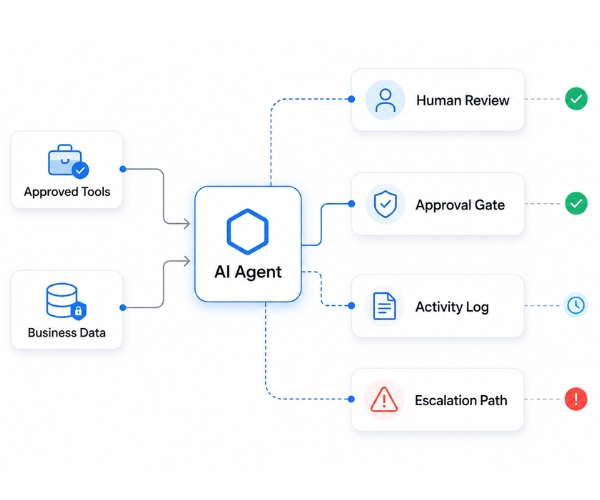
AI agents can plan tasks, use tools, trigger workflows, and act across business systems. Governance defines which decisions the agent owns, which actions need approval, how testing is handled, and how every step is recorded during AI agent development services.

  • Decision Boundaries: Define what the agent can decide, when it must stop, and which cases require human review.
  • Tool Access Rules: Control which APIs, databases, CRMs, ERPs, and internal systems the agent can use during execution.
  • Action Logging: Record tool calls, inputs, outputs, approvals, and exceptions so every agent action remains reviewable.
  • Escalation Paths: Route sensitive, failed, or uncertain cases to assigned team members with the right context.
Feature Image
Need Governance Controls for Your AI Systems?

Need Governance Controls for Your AI Systems?

Hudasoft reviews agents, chatbots, RAG systems, and workflow automation to identify control gaps, access risks, and missing evidence records. Our team helps define review rules, logging needs, escalation paths, and monitoring workflows around your active AI environment.

AI Governance Certification Readiness Support

Hudasoft helps organizations prepare the policies, risk records, control evidence, and technical documentation needed for ISO 27001 and ISO/IEC 42001 readiness. Each engagement focuses on clear ownership, traceable controls, audit evidence, and review workflows that support responsible AI adoption across enterprise systems.

Card Icon

ISO 27001 Readiness

Prepare security control evidence, access records, risk documentation, and audit support materials for information security compliance work.

Card Icon

ISO/IEC 42001 Readiness

Prepare AI management system documentation, governance policies, system records, risk controls, and monitoring evidence for AI governance readiness.

Card Icon

Audit Evidence Support

Organize approval logs, testing records, control mappings, review notes, and incident response documentation for internal and external review.

Frameworks Hudasoft Aligns Governance Work With

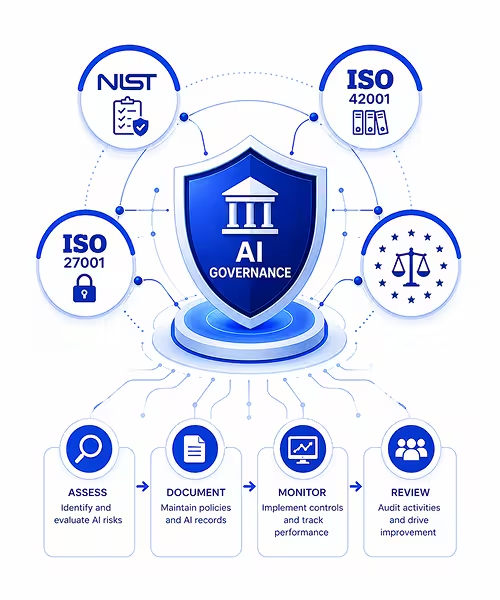
AI governance work should connect policies, technical controls, audit evidence, and review workflows with recognized frameworks. Hudasoft uses these frameworks to structure risk assessment, documentation, monitoring, and readiness work around each AI system.

NIST AI RMF

Used to classify AI risks, define governance controls, support testing, and monitor AI systems across design, deployment, and ongoing use.

ISO/IEC 42001

Used to prepare AI management system documentation, ownership records, operating procedures, risk controls, and continual improvement workflows.

ISO 27001

Used to support access controls, information security policies, risk records, audit evidence, and secure handling of business data.

EU AI Act

Used to support AI risk classification, transparency planning, human oversight, documentation, and governance controls for relevant use cases.

AI Governance Frameworks

How Hudasoft Builds Governance Into AI Delivery

Every AI governance engagement starts with the systems your teams already use and the decisions they need to control. Hudasoft turns that context into ownership rules, technical safeguards, evidence records, and monitoring routines.

1

Assess AI Usage

Review active AI tools, workflows, data exposure, vendors, policies, and approval gaps across business teams.

2

Classify Risk and Ownership

Assign risk levels, system owners, data sensitivity, user impact, and review needs for each AI use case.

3

Define Policies and Controls

Create usage rules, approval paths, documentation standards, monitoring requirements, and escalation procedures for governed AI.

4

Implement Technical Safeguards

Configure permissions, human review gates, audit logs, data controls, fallback rules, and secure system records.

5

Monitor and Improve

Track AI activity, incidents, model changes, control gaps, review findings, and improvement actions regularly.

Why Enterprise Teams Choose Hudasoft for AI Governance

Section visual

Hudasoft combines AI engineering, security awareness, governance documentation, and enterprise integration experience in one delivery model. Teams get practical controls for AI systems that use business data, support decisions, trigger workflows, and require clear accountability.

Governance for AI Connected With Business Systems

Hudasoft designs governance around AI systems connected with CRMs, ERPs, APIs, databases, support tools, and internal workflow platforms. This helps teams control access, actions, and records across real operating environments.

Decision Boundaries for Agentic Workflows

Our team defines which decisions AI can support, which actions require approval, and which cases need human review. This gives agents clear operating limits across business workflows.

Evidence Planning for Customer Assurance

Hudasoft prepares system records, approval logs, testing notes, control mappings, and review evidence. These records support enterprise customer checks, internal audits, and certification readiness work.

Security-Aware Data Access Design

AI systems are planned around approved data sources, user roles, sensitive records, and access restrictions. This helps reduce exposure when AI retrieves, processes, or summarizes business information.

Governance Across Multiple AI System Types

Hudasoft supports governance for agents, chatbots, RAG systems, predictive models, and workflow automation. Each system type gets controls based on its data use, actions, and user impact.

Implementation Experience Beyond Advisory Work

Hudasoft can connect governance planning with AI development services when clients need policies, controls, integrations, and AI systems delivered within the same project.

Excellence Through Visionary Leadership

Azfar Siddiqui
Azfar Siddiqui

Founder / CEO

LinkedIn
Saboor Ahmed
Saboor Ahmed

CTO (Chief Technology Officer)

LinkedInMediumDev

Frequently Asked Questions

FAQs

To select an AI governance service for a mid-sized business, start by checking whether the provider can assess your current AI use, data access, approval workflows, and compliance exposure. The service should cover policies, risk classification, technical controls, audit evidence, monitoring, and team adoption.
Choose a provider that can work with your existing systems, such as CRMs, ERPs, internal databases, chatbots, AI agents, and workflow automation tools. A good partner should give you a clear roadmap, not a generic policy document.

AI governance consulting pricing is usually based on project scope, business size, AI system complexity, compliance requirements, and the number of systems under review. Common models include fixed-scope assessments, monthly advisory retainers, implementation projects, and ongoing monitoring support.
A readiness assessment may have a defined project fee, while full governance implementation usually costs more because it includes policy work, system inventory, control design, documentation, testing, and audit evidence preparation.

AI governance services help with regulatory compliance by creating clear records for AI usage, risk classification, data access, human review, approvals, monitoring, and incident handling. These records help teams respond to audits, customer assurance checks, and internal compliance reviews.
They also align AI systems with relevant frameworks such as ISO 27001, ISO/IEC 42001, NIST AI RMF, and EU AI Act requirements where applicable. This helps businesses manage AI risk with documented controls and review workflows.

To select an AI governance software platform, review whether it supports AI inventory, risk scoring, policy management, approval workflows, audit logs, vendor tracking, monitoring, and reporting. The platform should match your AI use cases, data environment, and compliance needs.
Also check integration support with your existing systems. A platform is more useful when it can connect with business tools, model workflows, documentation sources, and review processes already used by your teams.

Implementing an AI governance framework helps businesses define who owns each AI system, what risks need control, which data can be used, and how outputs should be reviewed. This improves accountability across AI projects.
It also supports safer AI adoption by creating policies, approval paths, audit evidence, monitoring routines, and escalation rules. Teams can deploy AI with clearer controls and stronger readiness for compliance reviews.

Helpful Resources

Let us accelerate your

Custom App Development

Whether you're building from scratch, scaling what works, or exploring what's possible, we're here to help turn your ideas into impact.