












Hero Background

AI Agent Development Company

Build Custom AI Agents That Execute Real Workflows Across Your Enterprise Systems

Hudasoft is an AI agent development company that maps your workflows, scopes integrations, and defines governance requirements at the engagement start. Every agent we deliver runs reliably in production, with your team operating it independently.

Book a Free Consultation

Company 1
Company 3
Company 2
Company 8
Company 9
Company 10
Company 4
Company 5
Company 6
Company 6
Company 6

Measurable Impact Across Industries

0+

AI Solutions Deployed

0+

AI Proofs of Concept Delivered

0+

Business Processes Automated

0%

Operational Efficiency Improved

Business Operational Challenges

Which AI Agent Project Challenges Are Keeping Your Build From Going Live?

Engineering teams and delivery practitioners report the same breakdown points across agent projects. The controlled pilot environment passes review. Production exposes everything the pilot never tested. These are the specific stages where most custom AI agent development initiatives stall.

Agents deployed without clear decision ownership act on cases no one assigned to them. The agent escalates what it should resolve and resolves what it should escalate. Correcting decision boundaries on a live deployment pulls workflows offline and requires rebuilding the governance layer from scratch. An AI agent development company that skips this step in scoping leaves the client to discover it in production.

Organizations discover during development that source data is inconsistent across systems or locked in formats the agent cannot process. Standardizing that data takes longer than the model work and was not in the original budget. The project timeline slips well short of the integration phase.

Authentication setup, schema mapping, error handling, and retry logic each add weeks per system connection. Projects that budget one month for integrations consistently spend three. Integration starts late, extends past its window, and compresses every downstream milestone in the schedule.

Pilot environments run on clean data, engaged testers, and direct access to the engineers who built the system. Real users interact with the agent in patterns no pilot modeled. Edge cases that appear in week two of production have no resolution path because the team built the system around expected behavior. Actual production conditions expose a different set of inputs entirely.

Orchestration logic designed for one team carries assumptions about data structure, user behavior, and system load. Every additional team brings different source systems and different operational conditions. The agent that handled the first group needs significant rework to handle the next.

Business rules change. Approval thresholds get updated. Connected systems get migrated. The agent keeps executing against the logic it launched with. Practitioners call this silent drift: output gradually moves away from what the business expects, and no one identifies the source until a downstream system flags an error.

What is an AI Agent?

An AI agent is a software system that receives a defined goal, determines the steps required to reach it, uses connected tools and systems to act, evaluates the result, and decides what to do next. It handles multi-step tasks across enterprise applications with minimal human involvement between steps. The four operating components are perception, reasoning, action, and feedback. A chatbot responds to a single prompt and stops. An AI agent works through a sequence of decisions, adjusts based on what each step produces, and operates within defined governance boundaries from start to finish.

Prebuilt AI Agents for Specific Business Functions

Hudasoft builds production-ready agent products as part of its custom AI agent development services. Each product ships with domain-specific workflow logic and integration points that client teams configure to match their exact operational environment.

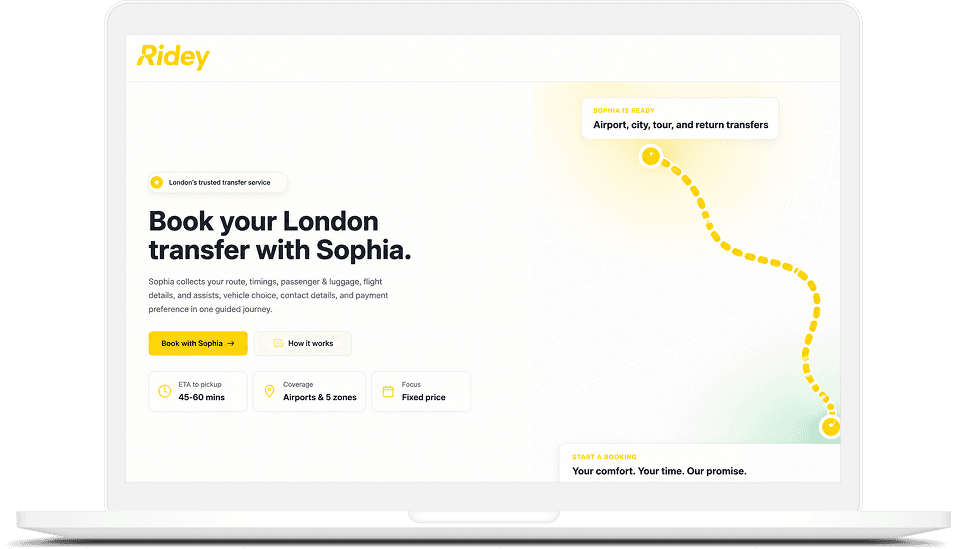
Ridey

Ridey handles the operational coordination layer for transportation businesses. It covers booking capture, fare calculation, dispatch matching, and passenger communication that dispatcher teams currently manage manually.

  • Booking Request Capture: Collect pickup and drop-off locations, travel dates, passenger count, vehicle type, and return-trip requirements from every channel into one consolidated format.
  • Instant Fare Preparation: Calculate quotes using distance, fixed routes, vehicle rates, waiting charges, airport fees, and approved pricing rules. Estimates stay consistent with operational policy without manual review.
  • Driver and Supplier Matching: Recommend available drivers or suppliers based on location, schedule, vehicle capacity, and trip requirements so fleet utilization stays high.
  • Passenger Communication: Send quotations, booking confirmations, driver details, pickup instructions, and post-trip messages through the passenger's preferred channel.
Feature Image

Custom AI Agent Development Services Built for Production

Hudasoft's custom AI agent development services cover the full scope from workflow analysis through stable production deployment. Every engagement delivers against what the client actually needs, with no shared service templates applied across projects.

Service Tab

Select the language model, memory configuration, tool access, and orchestration pattern based on the mapped workflow. Document every architecture decision and the reasoning behind it so the client team maintains the system independently after go-live.

Service Tab

Build systems where specialized agents coordinate tasks, share context, and execute complex workflows across business functions. Hudasoft's AI development services include multi-agent architecture for workflows that span multiple departments or exceed the reliable scope of a single agent.

Service Tab

Build the connectors, middleware, and authentication logic that allow agents to read from and write to your existing ERP, CRM, databases, internal APIs, and business applications. Hudasoft's enterprise AI development services cover custom connector development for legacy systems, with scope and budget defined in the initial planning phase.

Service Tab

Build the automation logic that connects agent decisions to actions in real business systems. This covers the sequences the agent runs, the business rules it applies, the exception paths it follows, and the escalation triggers that surface cases for human review.

Service Tab

Build the checkpoints, approval workflows, and review interfaces that allow human oversight at defined points in the process. This applies to high-value decisions, regulatory requirements, and workflow steps where the organization requires documented human accountability at each step the agent takes.

Service Tab

Implement role-based access, data handling policies, decision logging, and audit trail infrastructure as part of the build from day one. Every agent produces a complete, queryable record of its decisions and the inputs that produced them.

Service Tab

Monitor deployed agents for decision accuracy, system connectivity, and production performance. Update agent logic, business rules, and integration configurations as the operational environment changes so the agent continues producing accurate output through every phase of the operational lifecycle.

Use Cases for AI Agents Across Business Operations

Agents deliver the clearest results in workflows with defined decision rules, data retrieval across multiple systems, and repeatable coordination tasks. These are the operational areas where Hudasoft's custom AI agent development solutions reduce manual overhead and process bottlenecks most consistently.

Fleet and Transportation Coordination

Fleet and Transportation Coordination

Transportation businesses use agents to handle dispatch matching, fare calculation, and passenger communication. Routing logic and priority rules match supply with demand in real time across every booking request.

Internal Knowledge and Document Retrieval

Internal Knowledge and Document Retrieval

Organizations use agents to answer employee questions directly from approved internal records. Staff get source-verified answers without switching between systems or waiting on a colleague.

Construction Project Administration

Construction Project Administration

Project teams use agents to maintain documentation, flag schedule variance, and route communications. Site managers spend time on construction decisions. Status updates route through the agent automatically.

Regulatory Compliance Management

Regulatory Compliance Management

Compliance teams use agents to track policy acknowledgment, organize regulatory documentation, and route approval tasks through defined chains. Audit preparation becomes a report generation task with queryable records available at any point.

Appointment and Service Scheduling

Appointment and Service Scheduling

Service businesses use agents to match customer requests to available capacity, send confirmations, and handle rescheduling. The right AI services cover scheduling exception detection and surface those cases for human review at the point they occur.

Warranty and After-Sales Case Management

Warranty and After-Sales Case Management

Product companies use agents to manage warranty claim intake, routing, and tracking through resolution. AI consulting services help define how the agent maintains service history on the product record so each technician starts with full context.

Procurement and Vendor Management

Procurement and Vendor Management

Procurement teams use agents to collect vendor quotes, match purchase requests to approved suppliers, and route orders through defined approval chains. Every procurement decision carries a logged record accessible to finance and operations teams at any point.

HR Onboarding and Employee Request Handling

HR Onboarding and Employee Request Handling

HR teams use agents to manage onboarding task sequences, document collection, and system access provisioning across departments. Employees submit requests and receive status updates through the agent as each step in the sequence completes.

Start Your Agent Development Engagement

Start Your Agent Development Engagement

Tell us what your organization needs to automate. Hudasoft engineers map your workflows, assess your integration environment, and design a custom AI agent development solution around your existing systems and operational requirements.


Featured Case Studies

See how Hudasoft built AI agent systems around real business workflows, enterprise data, and measurable operational requirements. Every implementation reflects a distinct business problem and a production outcome the client can measure.

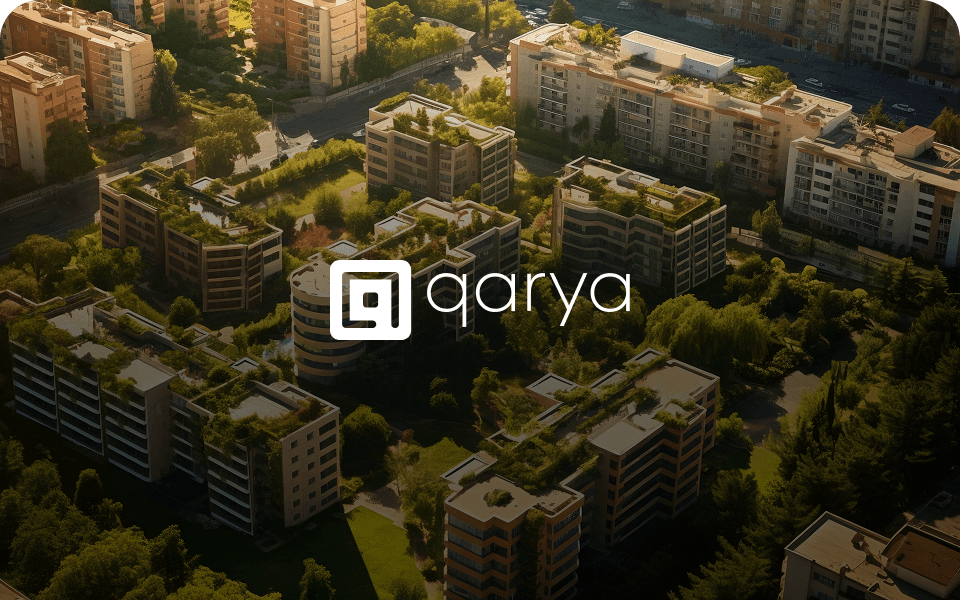
Enhancing Community Management with Qarya

Results Achieved

60%
Admin Workload Reduction
300%
Rent Collection Improvement
48%
Faster Resolution Time
100%
Implementation Within 60 Days

Enhancing Community Management with Qarya

Industry
Real Estate
Location
Saudi Arabia

Qarya is a smart community management platform built for real estate developers and property managers to streamline residential operations. Designed for the Saudi market, it simplifies rent collection, maintenance, tenant engagement, and community-wide communication.

Brown Coach – Interactive LMS Marketplace for Educators

Results Achieved

1000+
Educators Onboarded in 6 Months
82%
Course Completion Rate
4.8/5
App Rating on iOS & Android
40%
Reduced Manual Admin Workload

Brown Coach – Interactive LMS Marketplace for Educators

Industry
Edtech
Location
United States

Hudasoft partnered with Brown Coach, a visionary EdTech company from the United States, to build a first-of-its-kind Learning Management Marketplace. In just six months, we helped them go from concept to a fully functional platform that empowers educators and delights learners.

IBIZI – Automotive Dealership Management Solution

Results Achieved

40%
Improvement in Process Efficiency
70%
Faster Deal Entry Time
100%
Eliminated Duplicate DealNos
100%
Adoption in First 60 Days

IBIZI – Automotive Dealership Management Solution

Industry
Automotive
Location
Global

Hudasoft partnered with IBIZI to transform outdated dealership workflows into a fully digital, data-driven, and customer-centric platform. In less than a year, we helped IBIZI evolve from an idea into a powerful automotive dealership management solution that streamlines operations, delights customers, and drives measurable business growth.

How an AI Agent Development Company Takes a Project Into Production

Hudasoft follows a five-step delivery process that keeps the business requirement, technical design, integration work, and governance connected throughout every engagement. Every step produces a specific output the next step depends on.

 Process
01.

Workflow Mapping and Scope Definition

Document the business process, define decision ownership between agent and human, identify connected systems, and assess data readiness before architecture begins.

02.

Architecture and Tool Selection

Select the orchestration framework, language model, memory configuration, and integration approach based on the mapped workflow. Document every decision with its reasoning.

03.

Agent and Integration Development

Build agent logic, system integrations, workflow automation, and governance controls in parallel. Integration starts in phase one because it consistently runs long.

04.

Behavior Testing Against Real Scenarios

Run the agent against actual business data, including exception conditions and edge cases. Synthetic test cases miss inputs real production environments generate.

05.

Launch, Monitor, and Improve

Deploy with monitoring, governance controls, and escalation paths active. Every deployment includes a runbook and knowledge transfer for independent client operation.

01

Document the business process, define decision ownership between agent and human, identify connected systems, and assess data readiness before architecture begins.
02

Select the orchestration framework, language model, memory configuration, and integration approach based on the mapped workflow. Document every decision with its reasoning.
03

Build agent logic, system integrations, workflow automation, and governance controls in parallel. Integration starts in phase one because it consistently runs long.
04

Run the agent against actual business data, including exception conditions and edge cases. Synthetic test cases miss inputs real production environments generate.
05

Deploy with monitoring, governance controls, and escalation paths active. Every deployment includes a runbook and knowledge transfer for independent client operation.

What Does a Production-Ready AI Agent System Need?

The difference between an agent that holds up in production and one that passes a review meeting comes down to six engineering decisions. A qualified AI agent development company addresses these in the architecture phase, before the first line of code.

Card Icon

Decision Boundaries Defined in the Architecture

The agent knows exactly which decisions it owns and exactly when to stop and surface a case for human review. Agents without this clarity act on cases they should not and miss...

Read More
Card Icon

Integrations Tested Under Realistic Load

System connections hold up under the data volumes and concurrent usage patterns of a real production environment. Controlled testing windows with limited request volume do not...

Read More
Card Icon

A Complete Record of Every Decision

Each action the agent takes carries a log of the inputs it received, the logic it applied, and the output it produced. This record supports compliance audits, debugging, and...

Read More
Card Icon

An Architecture Built for More Than One Team

Scale is a design decision made during the build. The orchestration layer handles additional teams, integrations, and data volume without a rebuild.

Card Icon

Governance Controls That Run Automatically

Access permissions, data handling policies, and approval workflows operate on every interaction. Governance enforced at the system level produces consistently different outcomes...

Read More
Card Icon

Logic Updated When Business Rules Change

The agent's decision logic reflects current thresholds, current system configurations, and current business policy. An agent running against outdated rules becomes less reliable...

Read More

Competitive Analysis for AI Agent Development Services

Organizations evaluating an AI agent development company compare implementation methodology, integration capability, governance practices, and post-deployment support. The table below maps how Hudasoft approaches each area against Appinventiv, LeewayHertz, and Intuz.

What Businesses EvaluateAppinventivLeewayHertzIntuzHudasoft
Implementation ApproachEnterprise agents with compliance and scalability focusFull-lifecycle development using the ZBrain platformCustom agents for business process automationBuilds each engagement from the client's mapped workflow outward, applying no generic templates across projects
Workflow ExecutionMulti-system orchestration with autonomous decision-makingGoal-driven agents using LangChain, LangGraph, and LlamaIndexBusiness workflow automation with AI integrationExecutes tasks through your specific business rules, approval chains, and connected enterprise applications
Enterprise IntegrationERP, CRM, and cloud platform connections200+ prebuilt connectors through ZBrain BuilderBusiness application and API connectivityBuilds custom connectors for ERP, CRM, databases, internal APIs, and legacy systems requiring middleware
Governance and SecurityGDPR, HIPAA, and SOC 2 alignment with audit loggingGuardrails, evaluation suites, and runtime monitoringSecurity controls and compliance alignmentAccess controls, decision logging, and escalation paths designed into the architecture as primary deliverables
Production DeploymentCI/CD pipelines with observability dashboardsEvaluation harnesses, monitoring, and human feedback loopsDeployment with post-launch performance trackingDeploys with monitoring, documented runbooks, and knowledge transfer so clients operate the system independently
Prebuilt AcceleratorsIndustry-specific agent templates and toolingZBrain platform with preconfigured workflow componentsAutomation templates for common business functionsRidey, Graphy, Constry, Comply, Appointy, and Warranti as configurable products that reduce time to production
Post-Deployment SupportOngoing maintenance, upgrades, and model optimizationAgentOps with continuous monitoring and feedbackPost-launch support and optimization servicesUpdates agent logic, business rules, and system connections as the operational environment changes

Flexible Engagement Models for Every Stage

Every AI agent development engagement carries different requirements, timelines, and internal team capacity. These factors also influence the overall AI agent development cost, from discovery through production deployment. Hudasoft structures the working relationship around what the organization needs to deliver.

Card Icon

Discovery and Architecture Sprint

Use this model when the business problem is clear but the data readiness, integration path, or delivery scope needs validation at the scoping stage. This step produces a scoped...

Read More
Card Icon

Focused Pilot

Deploy a single-workflow agent against a defined use case to test decision quality, integration reliability, and operational fit with a controlled group. The pilot produces...

Read More
Card Icon

Full Product Development

Hudasoft owns the agent build from architecture and integration through evaluation, deployment, and ongoing support. This model suits organizations building production systems...

Read More
Card Icon

Dedicated AI Engineering Team

Hudasoft assembles a team that works exclusively on your agent initiative, providing consistent technical ownership across every milestone. This suits organizations running...

Read More

Tech Stack Selected for Your Data, Workflows, and Systems

Hudasoft selects every component of the tech stack based on the workflow requirements, production environment, data handling constraints, and operating cost of each specific engagement. Language model, orchestration framework, and integration tooling each get chosen for what the project needs, with no default configuration carried across engagements.

iOS

Swift
SwiftSwift
UI Kit
UI KitUI Kit
RxSwift
RxSwiftRxSwift
Combine
CombineCombine
MVVM
MVVMMVVM
Alomofire
AlomofireAlomofire
Core Data
Core DataCore Data

Android

Kotlin
KotlinKotlin
MVVM
MVVMMVVM
RxSwift
RxJavaRxJava
Java
JavaJava
Retrofit
RetrofitRetrofit
Jetpack
JetpackJetpack

Frontend

React js
React jsReact js
Next.Js
Next.JsNext.Js
Angular
AngularAngular
Vue
VueVue
Typescript
TypescriptTypescript
Html5
Html5Html5
CSS
CSSCSS
Javascript
JavascriptJavascript
GraphQL
GraphQLGraphQL
Apollo
ApolloApollo
MaterialUI
MaterialUIMaterialUI
Rest API
Rest APIRest API

Backend

Node.js
Node.jsNode.js
Python
PythonPython
Scala
ScalaScala
Php
PhpPhp
Java
JavaJava
Spring
SpringSpring
.Net
.Net.Net
Laravel
LaravelLaravel
Rest API
Rest APIRest API
Rest API
FAST APIFAST API
GO
GOGO
GO
Express JsExpress Js

CMS

Wordpress
WordpressWordpress
Magento
MagentoMagento
Shopify
ShopifyShopify
Contentful
ContentfulContentful

React

Redux
ReduxRedux
Mobx
MobxMobx
RxJS
RxJSRxJS
Redux Thunk
Redux ThunkRedux Thunk

Flutter

Bloc
BlocBloc
Dart
DartDart
MVVM
MVVMMVVM
Rx Dart
Rx DartRx Dart

Database

Mongodb
MongodbMongodb
MySQL
MySQLMySQL
MsSQL
MSSQL MSSQL
Dynamodb
DynamodbDynamodb
PostgreSQL
PostgreSQLPostgreSQL
IBM
IBMIBM
Redis
RedisRedis
Elasticsearch
ElasticsearchElasticsearch

DevOps

Nginx
NginxNginx
Docker
DockerDocker
Kubernetes
KubernetesKubernetes
Gradle
GradleGradle
Jenkins
JenkinsJenkins

Cloud

Aws
AWS AWS
Azure
AzureAzure
Rackspace
RackspaceRackspace
Linode
LinodeLinode
Firebase
FirebaseFirebase
Oracle Cloud
Oracle CloudOracle Cloud
Heroku
HerokuHeroku

Data Organization & Management

Databricks
DatabricksDatabricks
Snowflake
SnowflakeSnowflake
DataHub
DataHubDataHub
Pinecone
PineconePinecone
Weaviate
WeaviateWeaviate

Neural Network Programming & Model Training

PyTorch
PyTorchPyTorch
TensorFlow
TensorFlowTensorFlow
Keras
KerasKeras
JAX
JAXJAX

LLM Connectivity & 3rd Party APIs

LangChain
LangChainLangChain
LlamaIndex
LlamaIndexLlamaIndex
Google Gemini
Google GeminiGoogle Gemini
OpenAI
OpenAI APIOpenAI API
Deck
DeckDeck
SiliconFlow
SiliconFlowSiliconFlow

Multi-Agent Orchestration

LangGraph
LangGraphLangGraph
crewai
CrewAiCrewAi
autogen
Auto GenAuto Gen
semantickernel
Semantic KernelSemantic Kernel

ERP Development

Haystack
MorphXMorphX
tensorflow
X++X++
huggingFace
Microsoft/ALMicrosoft/AL

What Our AI Agent Clients Say

Hudasoft has deployed AI agent systems for transportation businesses, enterprise operations, and product companies across the US. These are the outcomes clients report after deployment.

Partners Who Trust Our Expertise
Ford Logo
Ipaas Logo
Mazda Logo
GMC Logo
Nissan Logo
Dodge Logo
Toyota Logo
Qarya Logo
Mercedes Benz Logo
Ibizi Logo
DealerERP Logo
BMW Logo
UberSheet Logo
CreekSquare Logo
Supply Chain Logo
Honda Logo
Audi Logo

Industries We Serve

Workflows, compliance requirements, and enterprise systems differ across industries. Hudasoft engineers AI agent development solutions around the operational structure of each sector, covering the specific decision logic, data sources, and integration points that industry requires.

Your AI Agent Pilot Works.   Why Is It Still Not in Production?

Your AI Agent Pilot Works. Why Is It Still Not in Production?

Most pilots stall because teams have not resolved data access, integration requirements, governance structure, or decision ownership. Hudasoft takes your scoped workflow and engineers a production-ready custom AI agent development solution that runs reliably on day one in production.

Why Choose Hudasoft for AI Agent Development?

Section visual

Moving a workflow from pilot to production requires more than building a model. It requires workflow-first scoping, accurate integration planning, governed decision logic, and a maintenance process that keeps the agent accurate as the business changes. These are the principles behind every custom AI agent development engagement Hudasoft delivers.

Workflow-First Scoping

Every engagement begins with a map of the business workflow, including decision ownership, approval sequences, escalation paths, and system dependencies. Architecture follows that map. The agent reflects how the business actually operates.

Custom Application Delivery

Hudasoft builds each agent system around your data, business rules, interfaces, and software environment. No engagement reuses a template from a previous project.

Model-Independent Architecture

The language model gets selected according to the workflow requirements, risk profile, latency needs, and operating cost for that specific engagement.

Controlled Business Actions

Hudasoft defines what the agent can retrieve, recommend, update, and send for approval. Agents operate within documented boundaries on every interaction.

Clear Improvement Path

Hudasoft sets monitoring criteria, evaluation benchmarks, ownership, and a future release plan before go-live. Agents do not get handed over without a maintenance structure in place.

Excellence Through Visionary Leadership

Azfar Siddiqui
Azfar Siddiqui

Founder / CEO

LinkedIn
Saboor Ahmed
Saboor Ahmed

CTO (Chief Technology Officer)

LinkedInMediumDev

Frequently Asked Questions

FAQs

A workflow automation tool follows a fixed sequence of steps its developers defined before deployment. It cannot evaluate context, handle inputs that fall outside its original programming, or determine a new course of action when conditions change. An AI agent receives a goal, reasons through the steps required to achieve it, uses connected tools to act, evaluates the result, and adjusts the next step based on what the current step produced. The practical difference appears in exception handling: automation stops or errors when a case falls outside its defined scope. An agent resolves the exception or escalates it with context already gathered.

Every engagement starts with a workflow mapping session that documents the business process the agent operates within, the decisions it owns, the systems it accesses, and the governance structure it must follow. Architecture and tool selection follow that map. Development, integration, and governance controls proceed in parallel. The engagement ends with a monitored production deployment and a knowledge transfer so the client team operates the system independently.

A single-workflow agent with standard enterprise integrations typically reaches production between 8 and 12 weeks. Multi-agent systems and deployments involving legacy infrastructure typically require 16 to 24 weeks. The most common source of schedule extension is data preparation work that scoping did not surface. Hudasoft includes a data readiness review in every scoping engagement to identify this early.

Workflows that involve multi-step decisions, data retrieval across more than one system, and repeatable coordination tasks with defined rules deliver the clearest results from agent automation. Common examples include document processing, case routing, compliance monitoring, scheduling coordination, procurement approvals, and after-sales case management. Workflows requiring subjective human judgment on every case work better with human-in-the-loop designs where the agent handles defined portions and escalates the rest.

Access controls, role-based permissions, decision logging, and data handling policies are part of the agent architecture from the first day of every engagement. Every decision the agent makes produces a logged record of the inputs it received, the logic it applied, and the output it produced. This record supports compliance audits, debugging, and systematic performance review. For regulated industries, Hudasoft designs the governance layer to meet the requirements of the applicable regulatory framework.

Yes. Integration with existing enterprise systems is a primary deliverable of every engagement. Hudasoft engineers build the connectors, middleware, and authentication logic that allow agents to read from and write to existing ERP, CRM, databases, internal APIs, and business applications. Legacy systems without modern API access require custom connector development, which Hudasoft scopes and budgets during initial engagement planning.

Business rules change, connected systems get updated, and data environments shift once an agent is in production. Without a maintenance process that reviews and updates agent logic in step with those changes, accuracy degrades gradually. Hudasoft provides ongoing AgentOps support that monitors decision accuracy, detects performance drift, and updates agent logic and integrations as the operational environment changes. This keeps the agent producing reliable output beyond the initial deployment period.

Yes. Single agents handle defined workflows end to end. Multi-agent systems distribute a more complex workflow across specialized agents that each own a defined segment and exchange context through a coordinated orchestration layer. Multi-agent architecture applies when the workflow spans multiple departments, involves parallel processing requirements, or exceeds the reliable scope of a single agent. The right architecture depends on workflow requirements, which Hudasoft determines during the scoping phase.

Helpful Resources

Let us accelerate your

Custom App Development

Whether you're building from scratch, scaling what works, or exploring what's possible, we're here to help turn your ideas into impact.